

Babanango | Where Ancient Continents and Wild Landscapes Collide
Updated: 6 days ago
The Cradle Beneath Our Feet: Kaapvaal, Zimbabwe, and Antarctica
At the base of Babanango lies the Kaapvaal Craton, a vast block of ancient continental crust more than 3.5 billion years old. Alongside it lies the Zimbabwe Craton to the north, and far to the south, what is now East Antarctica once nestled against this landmass. These three cratons were once fused together as part of supercontinents like Rodinia and later Gondwana.
These stable, unyielding cores of Earth’s crust acted as the foundation for everything that followed. Around their edges, younger rocks accumulated sediments, lava, and mountain belts all draped like patchwork over the older crust. It was along the southeastern edge of the Kaapvaal Craton, near modern-day Zululand, where Babanango’s geologic journey took shape.
FORGED IN FIRE: THE NATAL METAMORPHIC PROVINCE AND PONGOLA BASIN
The Natal Metamorphic Province, where Babanango lies today, formed as the Earth stitched continents together. It was here that tectonic plates collided, building mountain belts and burying rocks so deeply they were transformed into gneiss, schist, and amphibolite. These rocks, some of the oldest in South Africa, now form the skeletal ridges and highlands of Babanango.
To the northwest, remnants of the Pongola Supergroup among Earth’s earliest volcanic and sedimentary belts emerged along ancient river valleys like the White Umfolozi, showcasing stromatolites and volcanic lavas that tell of microbial life and ocean basins 3 billion years ago.

Above picture: Karoo Super Group and Pongola formation Cross Section
MOUNTAINS FROM THE RIFT: DRAKENSBERG, KLEIN DRAKENSBERG, AND THE EASTERN ESCARPMENT
As Gondwana began to fracture around 200 million years ago, molten rock surged through the crust. A chain of volcanic events gave rise to the Drakensberg Mountains, a towering basaltic shield along South Africa’s eastern rim. South of Babanango, the Klein Drakensberg formed from earlier tectonic uplifts, part of a long mountain belt now eroded by time.
This tectonic upheaval formed what we now call the Eastern Escarpment a steep edge where the land once dropped dramatically to the proto-Indian Ocean. Over millions of years, rivers and weather gnawed away at this escarpment, pushing it westward and cutting deep valleys and gorges into the hard, ancient rocks.

Above picture: Kaapvaal Carton Schist and Granite Cross section
BABANANGO EXPOSED: THE GIFT OF EROSION
It is this long process of erosion that sculpted the Babanango of today. Once buried under younger formations like the Karoo Supergroup, these older basement rocks have since been exhumed by the tireless work of rivers like the White Umfolozi.
Here, in Babanango, we now walk across billions of years of exposed geology:
* Ancient Archaean gneisses and granites, the bones of the Earth.
* Volcanic and sedimentary rocks from the Pongola era, whispering of primal life and marine shallows.
* Remnants of glacial tillites, wind-blown deserts, and swamplands from the Karoo period, tracing the climate journey of Gondwana.
* And the basalts and erosional remnants of the Drakensberg, shaped by the breakup of continents.

Above picture: Stromatolite section of rock from Pongola Super Group
A MODERN LANDSCAPE ROOTED IN DEEP TIME
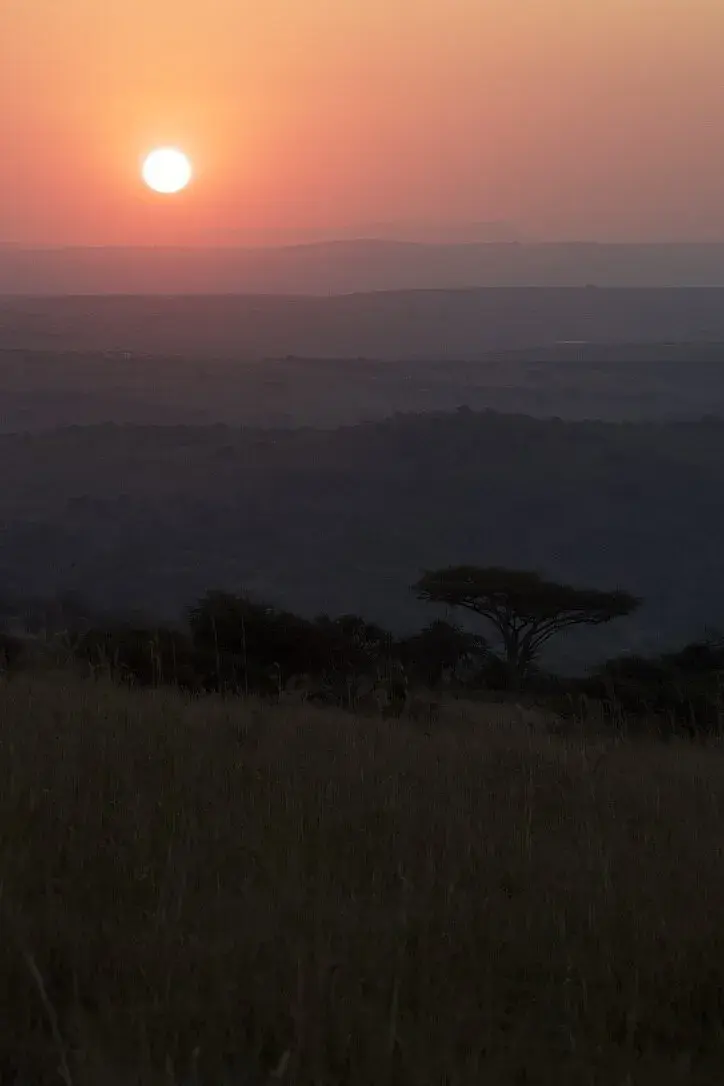
Today, Babanango Game Reserve rises from this geological foundation a living landscape where topography, soil, and stone directly shape the ecosystems above. Rugged ridges, forested valleys, and mineral-rich slopes support an extraordinary range of biodiversity. This diversity is no accident it is born from the chemistry and character of the land beneath.
For visitors, Babanango offers more than game drives and vistas it offers a chance to stand on rocks older than most life on Earth, to touch the legacy of supercontinents and ancient oceans, and to witness the power of time in motion.
Understanding Babanango’s geology is more than academic.
It: Explains the topography and biodiversity of the region. Aids in conservation planning, by revealing how soils and terrain support plant and animal life. Connects South Africa’s story to that of Antarctica, Zimbabwe, and the ancient supercontinents that once cradled this land.
Explore our Premium Safaris for a deeper experience of Africa
or design a Tailor-Made Journey shaped around your curiosity and comfort.
Rocks older than life itself? Mountains born from ancient continents?
Let's talk and read billions of years of history with your boots.


Comments